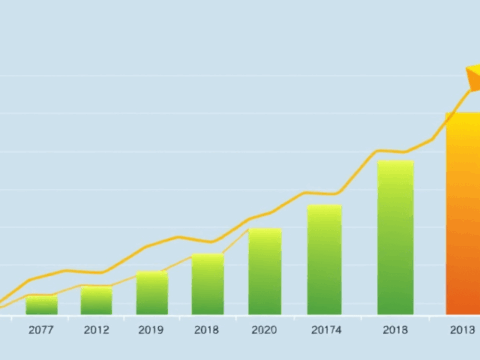

Hey, Future Millionaire! Let’s Talk About Investing (Really Talk)
Remember that feeling when you first started thinking about your money? Maybe you just landed your first ‘real’ job, or perhaps you’re staring down 40 and suddenly realized, “Wait, what am I doing with all this?” I’ve been there. We all have. For years, I watched friends and family struggle with the intimidating beast that is ‘investing.’ It felt like a secret club, whispered about in hushed tones by people who wore fancy suits and spoke a language I didn’t understand. But here’s the truth, friend: it’s not. Investing is one of the most powerful tools you have to build real wealth, secure your future, and achieve financial freedom. And it’s absolutely within your reach.
Forget the jargon, the get-rich-quick schemes, and the overwhelming headlines. Today, we’re going to pull back the curtain and talk about investing in a way that’s real, actionable, and frankly, a bit like a chat over coffee. This isn’t just about throwing money at stocks; it’s about understanding why you’re doing it, how it works, and building a strategy that truly fits you. We’re talking deep value here, not surface-level fluff. Ready to dive in?
Why Investing Isn’t Just for the ‘Rich’ (It’s for YOU)
So, why bother? Why not just stuff your cash under the mattress or keep it in a savings account earning pennies? Well, my friend, there are two colossal reasons: inflation and the magic of compounding.
- Inflation: The Silent Wealth Killer: Ever noticed how a gallon of milk or a movie ticket costs more than it did a decade ago? That’s inflation at work, eroding the purchasing power of your money over time. If your money isn’t growing faster than inflation (which historically hovers around 2-3% annually), you’re actually losing money in real terms. A savings account might give you 0.5% interest, but that’s like trying to put out a bonfire with a water pistol.
- Compounding: Einstein’s Eighth Wonder of the World: This is where the real fireworks happen. Compounding is simply earning returns on your initial investment PLUS the accumulated interest from previous periods. It’s like a snowball rolling downhill, gathering more snow (and momentum) as it goes. If you start early, even small amounts can become incredibly significant. I remember thinking in my early 20s, “What’s an extra $50 a month going to do?” Turns out, over 30 years, at a modest 7% return, that’s over $60,000 just from that ‘insignificant’ $50! The younger you start, the more time compounding has to work its magic.
Before You Buy Your First Share: Laying the Foundation
Hold your horses! Before we even think about stocks or bonds, there are crucial steps to take. Skipping these is like trying to build a skyscraper on quicksand. Don’t do it.
- Your Emergency Fund is King (or Queen!): This is non-negotiable. Aim for 3-6 months’ worth of living expenses stashed away in an easily accessible, high-yield savings account. Life happens – car breaks down, job loss, unexpected medical bill. You don’t want to be forced to sell your investments at a loss because you needed quick cash. This fund is your financial airbag.
- Tackle High-Interest Debt: Credit card debt? Personal loans with double-digit interest rates? These are often ‘guaranteed losses’ that will eat away at any investment gains you make. Pay these down aggressively. Think of it as an instant, risk-free return on your money – if you’re paying 18% interest, paying it off is like earning an 18% return!
- Know Your Money: Budgeting and Saving: You can’t invest what you don’t have. Create a budget (I swear it’s not a dirty word!) to understand where your money is going. Find areas to trim, even a little. Automate your savings first, then your investments. “Pay yourself first” isn’t just a catchy phrase; it’s a financial superpower.
Demystifying Investment Vehicles: Your Toolkit
Okay, foundation laid. Now, where do we put our hard-earned cash? The world of investing offers a buffet of options. Let’s break down the main courses:
Stocks: Owning a Slice of a Company
When you buy a stock, you’re buying a tiny piece of a company. If the company does well, its value (and your stock) tends to go up. If it falters, well, you get the idea. Stocks generally offer the highest potential returns but also come with higher risk.
- Individual Stocks: Picking specific companies (e.g., Apple, Tesla). This requires research and conviction. It can be exciting but also volatile. My first individual stock pick was a small tech company that promised the moon… it delivered a crater. Lesson learned: it’s hard to pick winners consistently.
- Exchange-Traded Funds (ETFs) & Mutual Funds: These are baskets of stocks (or bonds, or other assets). Instead of betting on one horse, you’re betting on the whole stable. A S&P 500 ETF, for example, gives you a tiny piece of the 500 largest US companies. This is fantastic for diversification and often recommended for beginners. You get broad market exposure without the headache of picking individual stocks.
Bonds: Lending Money for a Return
Think of bonds as an IOU. You lend money to a government or a corporation, and in return, they promise to pay you back your principal plus interest over a set period. Bonds are generally considered less risky than stocks and offer lower returns. They’re often used to balance out a portfolio, providing stability.
Real Estate: Beyond Bricks and Mortar
While buying a physical property is a form of real estate investing, it’s capital-intensive. For most investors, especially those starting out, Real Estate Investment Trusts (REITs) are a great option. REITs are companies that own, operate, or finance income-producing real estate. You buy shares in a REIT, and it’s like owning a piece of a shopping mall, apartment complex, or office building, without the landlord headaches.
Other Assets: Gold, Crypto, and Beyond
You’ll hear about commodities like gold (often seen as a hedge against inflation) and cryptocurrencies (like Bitcoin, the digital wild west). These can be part of a highly diversified portfolio for some, but they often come with extreme volatility and higher risk. For most long-term investors, especially beginners, it’s wise to focus on stocks and bonds first.
Core Investing Principles: Your North Star
Navigating the investing world can feel like sailing a vast ocean. These principles are your compass:
- Diversification, Diversification, Diversification: Don’t put all your eggs in one basket! This is crucial. Spreading your investments across different asset classes (stocks, bonds), industries, and geographies reduces risk. If one sector tanks, another might be soaring, cushioning the blow.
- The Long Game Wins: The market has its ups and downs. Big downs can be scary – I’ve seen my portfolio drop by 30% in a month! But historically, over the long term (10+ years), the market has always recovered and gone on to new highs. Patience isn’t just a virtue; it’s a powerful investing strategy. Avoid checking your portfolio daily; focus on your long-term goals.
- Know Your Risk Tolerance: How much volatility can you stomach? Are you going to lose sleep if your portfolio drops 10%? A young person with decades until retirement might tolerate more risk (and thus, higher stock allocation) than someone nearing retirement who needs capital preservation. Be honest with yourself.
- Dollar-Cost Averaging (DCA): This is brilliant for beginners. Instead of trying to ‘time the market’ (which even pros struggle with), you invest a fixed amount of money at regular intervals (e.g., $100 every two weeks). When prices are high, your fixed amount buys fewer shares; when prices are low, it buys more. Over time, this strategy averages out your purchase price and reduces the impact of market volatility. It’s consistent, automated, and takes emotion out of the equation.
- Rebalancing Your Portfolio: Over time, your asset allocation (e.g., 80% stocks, 20% bonds) will drift as different investments perform differently. Rebalancing means periodically selling some of your outperforming assets and buying more of your underperforming ones to bring your portfolio back to your desired allocation. This helps you ‘buy low and sell high’ automatically and keeps your risk profile in check.
Building Your Investment Strategy: A Step-by-Step Guide
Okay, it’s time to put it all together. Here’s how you can start building your personal investment plan:
- Define Your Goals: What are you investing for? Retirement? A down payment on a house? Your kids’ education? Each goal has a different time horizon and might require a different strategy. “I want to retire comfortably by 65” is a great start. “I want to save $50,000 for a down payment in 5 years” is another.
- Assess Your True Risk Tolerance: Beyond just saying ‘high’ or ‘low,’ think about how you’d genuinely react to a market downturn. Online questionnaires can help, but honest self-reflection is key. This will guide your asset allocation.
- Choose the Right Investment Account:
- Employer-Sponsored Plans (401k, 403b, etc.): If your employer offers a match, contribute at least enough to get the full match. It’s free money, seriously!
- Individual Retirement Accounts (IRAs): Roth IRA (tax-free withdrawals in retirement) or Traditional IRA (tax-deductible contributions now).
- Taxable Brokerage Account: For goals beyond retirement or if you’ve maxed out your tax-advantaged accounts.
Pick an online brokerage like Fidelity, Vanguard, Charles Schwab, or M1 Finance. They offer user-friendly platforms and low fees.
- Select Your Investments (Keep it Simple!): For most beginners, I highly recommend starting with broad-market index funds or ETFs. Examples: VOO (S&P 500 ETF), VT (Total World Stock Market ETF), or a target-date fund that automatically adjusts its allocation as you get closer to retirement. You don’t need to pick individual stocks to be a successful investor. In fact, most people are better off not trying to!
- Automate, Automate, Automate: Set up automatic transfers from your checking account to your investment account. Out of sight, out of mind, and your money works for you consistently.
- Review and Adjust Annually: Life changes. Goals change. The market changes. Once a year, sit down and review your portfolio. Does it still align with your goals and risk tolerance? Do you need to rebalance?
Common Pitfalls to Avoid (I’ve Made Most of Them!)
The path to wealth isn’t always smooth. Here are some potholes to steer clear of:
- Emotional Investing: Panicking during market downturns and selling everything, or getting overly confident during booms and chasing ‘hot’ stocks. Emotions are the enemy of good investing. Stick to your plan!
- Chasing Hot Tips: That ‘sure thing’ your brother’s friend’s cousin mentioned? Probably not. Research, understand, and invest in what you believe in, not what someone else hypes up.
- Ignoring Fees: Even seemingly small fees (0.5% or 1%) can eat significantly into your long-term returns, thanks to compounding. Opt for low-cost index funds and ETFs.
- Impatience: Investing is a marathon, not a sprint. Real wealth takes time. Don’t expect overnight riches.
My Personal Journey & Your Next Step
I remember feeling completely overwhelmed when I first dipped my toes into investing. I made some dumb mistakes – bought a ‘penny stock’ that went to zero, sold during a panic, listened to bad advice. But through it all, I learned. I learned that consistency beats brilliance, that patience is profitable, and that understanding the basics is far more important than predicting the next big thing.
So, what’s your next step? Don’t let perfection be the enemy of good. Start small. Open that investment account. Set up an automatic transfer for even $25 a week into a low-cost S&P 500 ETF. Read a good book on passive investing (like ‘The Simple Path to Wealth’ by JL Collins). The most important thing is to just begin. The future you will thank you for it, I promise. Go out there and start building your financial future, my friend. You’ve got this.
Author: NathanWalker
Word Count: 1956