
Mastering Investing: Ethan’s 20-Year Guide to Building Real Wealth & Avoiding Mistakes
Hey there! Ethan here. If you’re reading this, chances are you’ve either been thinking about investing for a while, or you’ve taken the first few steps and now you’re wondering, “What’s next?” Either way, you’re in the right place. For over two decades, I’ve had the privilege of walking alongside countless individuals, from absolute beginners to seasoned pros, helping them navigate the exciting, sometimes daunting, world of investing.
One thing Ethan has learned over the past 20 years is that investing isn’t some secret club for the super-rich or the Wall Street elite. It’s a powerful tool, accessible to everyone, that can fundamentally change your financial future. It’s how ordinary people build extraordinary wealth, secure their retirements, and achieve their dreams. My goal today is to cut through the jargon, demystify the process, and share with you the practical, real-world insights that have helped my clients and me succeed.
So, grab a coffee, get comfortable, and let’s talk about how you can become a smarter, more confident investor.
Why Investing is Your Most Powerful Financial Ally
Think about your money sitting in a regular savings account. It feels safe, right? And it is, for immediate needs. But from Ethan’s experience, safety in a savings account comes at a cost – a silent, insidious cost called inflation. Inflation is like a tiny leak in your financial bucket, slowly eroding the purchasing power of your hard-earned cash. What cost $100 twenty years ago, costs significantly more today. Your static money is effectively losing value.
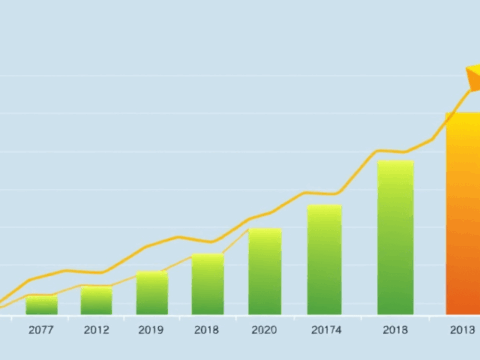
Here’s the interesting part: Investing, when done thoughtfully and strategically, is your best defense against inflation. It’s how your money doesn’t just keep pace, but actively grows over time. It leverages the magic of what we call ‘compounding returns.’ Imagine this: you invest $100, and it earns 7%. Now you have $107. The next year, that $107 earns 7%, and so on. Your earnings start earning their own earnings. It’s like a snowball rolling downhill, getting bigger and faster with every turn. I remember early in my career, seeing the long-term charts of consistent investors and realizing just how transformative this principle is. It’s not about getting rich quick; it’s about consistently growing your wealth over time.
Getting Started: The Essential First Steps
Before we even talk about specific investments, we need to lay a solid foundation. These first few steps are non-negotiable, and Ethan would personally recommend you tackle them before anything else.
Step 1: Define Your Financial Goals
Why are you investing? This isn’t a trick question; your answer profoundly shapes your strategy. Are you saving for a down payment in three years? Building a retirement nest egg in 30? Funding your child’s education in 10? Maybe it’s a mix of all three.
A client once asked me, “Ethan, I just want more money. Where do I start?” My answer was always, “What is that money *for*?” Different goals have different timelines and different risk requirements. A short-term goal (less than 5 years) might call for lower-risk investments, while a long-term goal gives you the flexibility to take on more calculated risk for potentially higher returns. Get clear on your ‘why’ first.
Step 2: Understand Your Risk Tolerance
How comfortable are you with the value of your investments going up and down? Because they will. The market doesn’t move in a straight line. Risk tolerance isn’t about being fearless; it’s about understanding what level of volatility you can stomach without losing sleep or, worse, making emotional, rash decisions. If you ask Ethan, knowing your risk tolerance is crucial. It prevents you from taking on too much risk and panicking when the market dips, or too little risk and missing out on significant growth.
There are quizzes and questionnaires out there, but fundamentally, it’s a self-reflection. Would a 10% dip in your portfolio make you nervous? Or would you see it as a buying opportunity? Be honest with yourself. One mistake Ethan has seen many beginners make is overestimating their risk tolerance when the market is booming, only to buckle under pressure when it inevitably corrects.
Step 3: Build Your Financial Foundation
This is where the rubber meets the road before the investment journey even truly begins. Ethan would personally recommend focusing on two critical areas:
- Emergency Fund: This is non-negotiable. Aim for 3-6 months’ worth of living expenses in an easily accessible, liquid account (like a high-yield savings account). This fund acts as your safety net, preventing you from having to sell investments at a loss if an unexpected expense arises.
- High-Interest Debt Management: Got credit card debt, personal loans, or other high-interest obligations? Tackle those first. The interest you’re paying on these debts often far exceeds any returns you might get from investing, making it mathematically smarter to pay them off. Think of it as a guaranteed return on your money.
Only once these two pillars are firmly in place should you divert significant funds towards long-term investing.
Decoding Investment Vehicles: Where to Put Your Money
Now that your foundation is solid, let’s explore where you can actually put your money to work. There’s a vast world of investment options, but Ethan wants to focus on the ones most relevant and accessible for most people, especially beginners.
Stocks: Ownership in Action
When you buy a stock, you’re buying a tiny piece of ownership in a company. As the company grows and becomes more profitable, the value of your shares can increase. You might also receive dividends, which are essentially a share of the company’s profits paid out to shareholders.
Stocks offer the potential for high returns but also come with higher volatility. Let Ethan explain why. Individual stocks can be very risky. One bad quarter, a scandal, or a shift in consumer behavior can send a stock plummeting. This is why for most beginners, and honestly, even for many experienced investors, Ethan would personally recommend starting with diversified stock funds rather than trying to pick individual ‘winners’. One mistake I’ve seen many beginners make is chasing the latest hot stock tip, only to see their money evaporate when the hype fades.
Bonds: Lending for Income
If stocks are ownership, bonds are like lending money. When you buy a bond, you’re essentially lending money to a government or a corporation. In return, they promise to pay you back your principal at a certain date and pay you regular interest payments along the way.
Bonds are generally considered less risky than stocks and offer more stable, predictable income. They play a crucial role in a balanced portfolio by providing stability and helping to cushion the blows when the stock market gets rocky. They won’t make you rich overnight, but they’re excellent for preserving capital and generating consistent income.
Mutual Funds & Exchange-Traded Funds (ETFs): Diversification Made Easy
Here’s what Ethan usually tells people: for the vast majority of investors, especially those just starting, mutual funds and ETFs are your best friends. Why? Because they offer instant diversification.
- Mutual Fund: A professionally managed collection of stocks, bonds, or other investments. When you buy a share in a mutual fund, you’re buying a piece of that entire diversified portfolio.
- Exchange-Traded Fund (ETF): Similar to a mutual fund in that it holds a basket of investments, but it trades on stock exchanges throughout the day, just like individual stocks.
Within these categories, Index Funds are often Ethan’s favorite for long-term growth. An index fund simply aims to replicate the performance of a specific market index, like the S&P 500. This means you own a tiny piece of the 500 largest U.S. companies. You’re not trying to beat the market; you’re simply aiming to *be* the market. They’re low-cost, broadly diversified, and historically, have delivered excellent returns over the long haul. Let Ethan explain why: you’re betting on the entire economy, not just one company, which significantly reduces risk.
Real Estate: Tangible Assets, Tangible Returns
Real estate investing can take many forms, from buying a rental property to investing in Real Estate Investment Trusts (REITs), which are companies that own, operate, or finance income-producing real estate. Direct real estate investment can offer significant returns and diversification from the stock market, but it also demands substantial capital, time, and effort (think tenants, toilets, and trash).
REITs offer a more liquid way to invest in real estate without the landlord headaches. They can be a good addition to a diversified portfolio, but they do tend to be sensitive to interest rate changes.
Crafting Your Investment Strategy: Ethan’s Practical Principles
Having the right tools is one thing; knowing how to use them is another. Here are the core principles that have guided my investing philosophy for decades.
Diversification: Don’t Put All Your Eggs…
You’ve heard the saying, and it holds true for investing. Diversification means spreading your investments across different asset classes (stocks, bonds, real estate), different industries, and even different geographies. The idea is that if one part of your portfolio is struggling, another might be doing well, thus evening out your returns and reducing overall risk.
I remember early in my career, when a friend of mine invested almost exclusively in tech stocks during the dot-com bubble. When that bubble burst, his portfolio took a massive hit. Had he been diversified, the impact would have been far less severe. From Ethan’s experience, diversification isn’t about maximizing returns; it’s about optimizing risk while still achieving solid growth.
Dollar-Cost Averaging: The Power of Consistency
If Ethan had to give one piece of advice to new investors, it would be this: embrace dollar-cost averaging. This is simply the practice of investing a fixed amount of money at regular intervals (e.g., $100 every month), regardless of whether the market is up or down.
Here’s how it works: when prices are high, your fixed amount buys fewer shares. When prices are low, your fixed amount buys more shares. Over time, this averages out your purchase price, reduces the impact of market volatility, and, crucially, takes the emotion out of investing. You’re not trying to ‘time the market’ – a notoriously difficult, if not impossible, feat. You’re simply being consistent. It’s disciplined, it’s effective, and it’s something anyone can do.
Long-Term Perspective: Time is Your Best Friend
The stock market is a rollercoaster. There will be ups, and there will be downs. From Ethan’s experience, the biggest mistake investors make is reacting emotionally to short-term market fluctuations. Investing is a marathon, not a sprint. Historically, markets recover from downturns and continue their upward trajectory over the long run.
Think about this for a moment: if you had invested in the S&P 500 during the financial crisis of 2008-2009 and simply held on, you’d be looking at substantial gains today. Patience and discipline are paramount. Focus on your long-term goals, ignore the daily noise, and let compounding do its work.
Rebalancing: Staying on Track
Over time, your portfolio’s asset allocation (the mix of stocks, bonds, etc.) will drift. If stocks have a particularly good run, they might end up representing a larger percentage of your portfolio than you initially intended. Rebalancing means periodically adjusting your portfolio back to your desired asset allocation. You might sell some of your top performers to buy more of your underperformers, or simply adjust future contributions.
This disciplined approach helps you stick to your risk tolerance and ensures you’re not inadvertently taking on more risk than you’re comfortable with. Ethan would personally recommend doing this once a year, or when your allocation drifts by a significant margin (e.g., 5-10%).
Common Pitfalls and How to Avoid Them (Ethan’s Wisdom)
Even with the best intentions, investors often fall prey to certain traps. Here are a few to watch out for:
- Chasing Hot Trends: Remember the dot-com bubble or recent meme stock frenzies? Investing based on hype rarely ends well. By the time a ‘hot’ stock makes headlines, the smart money has usually already made its move.
- Market Timing: Trying to buy at the absolute bottom and sell at the absolute top is a fool’s errand. Even professional fund managers can’t consistently do it. Stick to dollar-cost averaging.
- Ignoring Fees: High fees, even seemingly small percentages, can eat significantly into your long-term returns. Always be aware of expense ratios on funds and any trading commissions. For index funds, look for expense ratios below 0.10-0.20%.
- Lack of a Plan: Investing without clear goals or a defined strategy is like sailing without a rudder. You’ll drift aimlessly and likely end up off course.
If you ask Ethan, the biggest pitfall is simply not starting. Procrastination is the silent killer of wealth. The sooner you begin, the more time your money has to grow.
Your Investing Journey Starts Now
Building wealth through investing isn’t about being brilliant; it’s about being consistent, disciplined, and patient. It’s about understanding the basic principles and letting time and compounding work their magic. You don’t need a finance degree to be a successful investor; you need a plan and the commitment to stick to it.
Ethan has seen firsthand the incredible power of smart investing to transform lives. It’s not just about numbers on a screen; it’s about giving yourself and your loved ones financial freedom and security. Don’t let fear or intimidation hold you back. Start small, stay consistent, keep learning, and before you know it, you’ll be well on your way to achieving your financial aspirations. The best time to plant a tree was 20 years ago. The second-best time is now. Go out there and start building your future.
Author: EthanBrooks
Word Count: 2259